
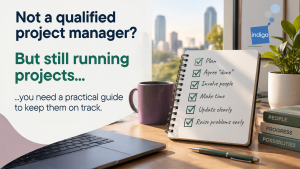
 If you’ve ever been told “can you just pick this up?”, you’re probably running a project. It might be a new system, a process change, an office move or a service improvement. And it’s almost certainly something you’ve been asked to fit around your day job.
Most projects aren’t run by people with “project manager” in their job title. They’re run by managers, specialists and team leaders who are expected to deliver change without necessarily having the training, time or authority that usually comes with the role. It’s little wonder that non-project managers often find projects harder than they need to be.
The good news is that you don’t need a project management qualification to run a project well. You need a few practical habits, applied early. As you shape your 2027 plans, here’s a checklist to keep your projects on track.
Survival checklist for non-project managers
- Can you explain the project in one sentence? If you can’t explain what the project will deliver and why it matters in a sentence or two, nobody else will be clear either. Get that sentence right before anything else, and use it whenever someone asks what you’re working on.
- Have you agreed what “done” looks like? Many projects go wrong because people assume they share the same picture of success. Ask the person who requested the project what the finished result should look like and how they’ll judge whether it has worked. Agreeing this early gives everyone a clear target.
- Have you thought before you started? It’s tempting to dive straight in, especially when you’re busy. But rushing into activity before you’ve thought through the project can create problems that take far longer to fix later. A little planning up front can prevent a lot of wasted effort. Early activity isn’t the same as early progress.
- Do you know who needs to be involved? Identify the people who can help, influence or hold up the project, including those who might not seem interested yet. Bring them into the conversation early. It’s much easier to get support when people understand what’s happening and have had the opportunity to contribute.
- Have you made time for it? A project on top of the day job won’t get done in the gaps. Block time in your calendar for project work, and be honest about what else will need to move to make room. If you can’t make time for the project, address that before committing to a deadline.
- Do you know what can give if things slip? Every project involves balancing time, cost and scope (what gets delivered). If one changes, something else may need to change too. Agree early on what matters most, so when problems arise, you make informed decisions rather than trying to deliver everything regardless of the circumstances.
- Are your updates short and clear? When someone asks “how’s it going?”, lead with the headline: on track, at risk or behind, and what you need. Save the detail for anyone who asks. Clear updates build confidence; long ones can leave people wondering whether everything is really under control.
- Do you raise problems early? Bad news rarely improves with age. Flag issues while there’s still time to act, and bring options rather than just the problem. People are generally more willing to help solve a problem when they have time to act.
Why these skills matter beyond the project
These skills are useful well beyond the project itself. Planning work, managing competing priorities, communicating with different stakeholders and dealing with problems are valuable skills in almost any role.
Delegates on our workshops often tell us they’ve become better organised, more confident working across teams, clearer in their communication and quicker to spot potential problems.
These are skills that help you deliver better results now and provide a strong foundation for taking on greater responsibility in the future.
Make your next project easier to manage
You don’t need to become a full-time project manager to run a project well. But you do need the right tools, techniques and confidence to plan the work, manage people and deal with problems before they become bigger issues.
The Project Management Survival Guide™ is a two-day workshop for people who run projects alongside their day job. It’s practical rather than theoretical, giving you tools and techniques you can put to work straight away, from planning and managing risk to keeping stakeholders on board.
- Public workshops in London and online, see the full calendar.
- For your team: We also deliver the workshop in-house, online or face to face. Practical Projects™, our one-day version, covers the essentials for teams who can’t take two days away from work. Enquire here.
Find out more about the Project Management Survival Guide™ and book your place
Communication is half the battle. Read our related blog: Project communication skills: the reason good plans still fail.
Frequently asked questions
Do I need a project management qualification to run a project?
No, many everyday workplace projects can be managed effectively without formal project management qualifications. What matters is having a practical approach to planning, organising work, communicating with people and managing problems as they arise. These are skills you can learn and develop through training and experience.
What’s the biggest mistake non-project managers make?
Starting work before agreeing what the project should deliver and what success looks like. When objectives and expectations aren’t clear, it’s easy for requirements to change, deadlines to slip and people to work towards different outcomes. Agreeing the purpose and desired result at the beginning gives the project a much stronger foundation.
How do I manage a project alongside my day job?
Block time for it in your calendar, agree realistic deadlines before you commit, and be clear about what else needs to move. When priorities clash, take the decision to the person who can make it rather than trying to do everything yourself. Review progress regularly so you can spot problems before they affect delivery.
Which course is right for non-project managers?
The Project Management Survival Guide™ is a two-day practical workshop with public dates online and in London. For teams, Practical Projects™ covers the essentials in one day and is delivered in-house.